
We often think about strength, flexibility or cardiovascular fitness when we talk about ageing well. Balance tends to receive less attention, at least until we begin to feel less steady than before.
Yet balance is part of almost everything we do. We use it when we walk on uneven ground, step out of the shower, climb stairs, turn quickly or catch ourselves after a small stumble. It helps us move with confidence and remain independent.
The encouraging thing is that balance is not something we either have or do not have. It is a skill, and it can be trained.
Balance is more than standing on one leg
Good balance is the result of several systems working together. Our eyes tell us where we are. The inner ear helps us sense movement and orientation. Receptors in our muscles, joints and feet give the brain information about the position of the body. Strength and reaction time then allow us to respond.
This is why balance can feel different from one day to another. Tiredness, poor sleep, stress, pain, certain medications or simply not having moved much can all affect how steady we feel.
It is also why practising only one static pose is not enough. In real life, balance is dynamic. We need to adjust when the ground changes, when we turn our head, when we carry something or when our attention is elsewhere.
Why does balance become more important after 50?
With age, muscle strength, sensory awareness and reaction speed may gradually decline. Menopause can add another layer because changes in muscle, bone health, sleep and joint comfort may influence the way we move.
This does not mean that falling is inevitable. It means that balance deserves the same regular attention as mobility and strength.
The World Health Organization recommends that older adults include varied, multicomponent physical activity with an emphasis on functional balance and strength. The message is simple: practising these abilities helps preserve them. We do not need to wait until we feel unsteady to begin.
Yoga can help, but variety matters
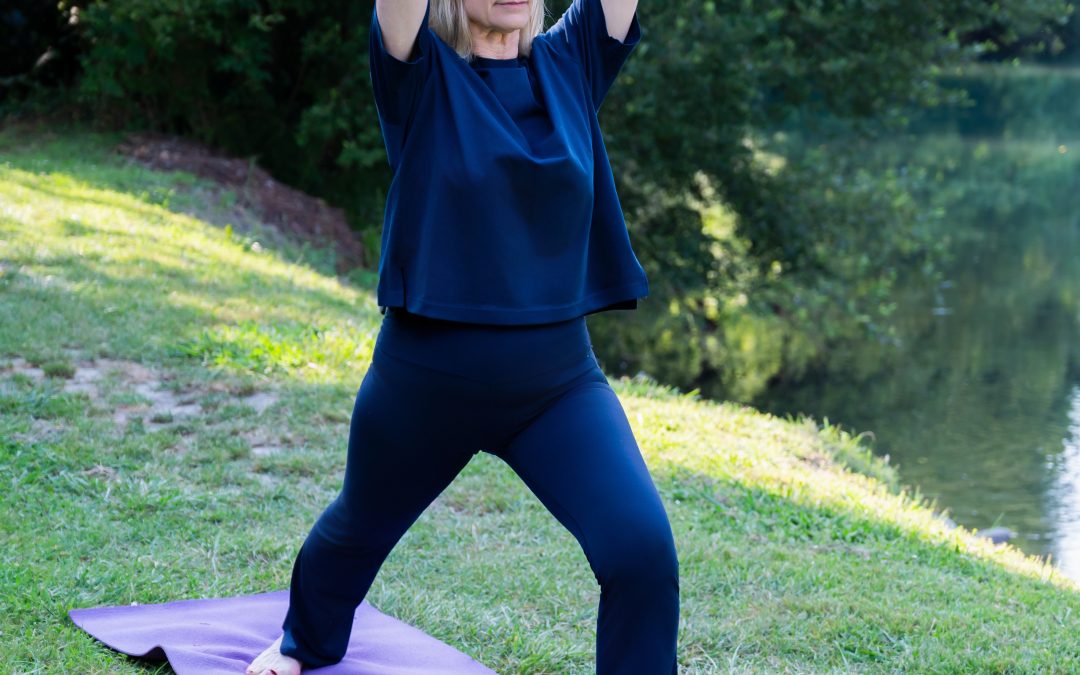
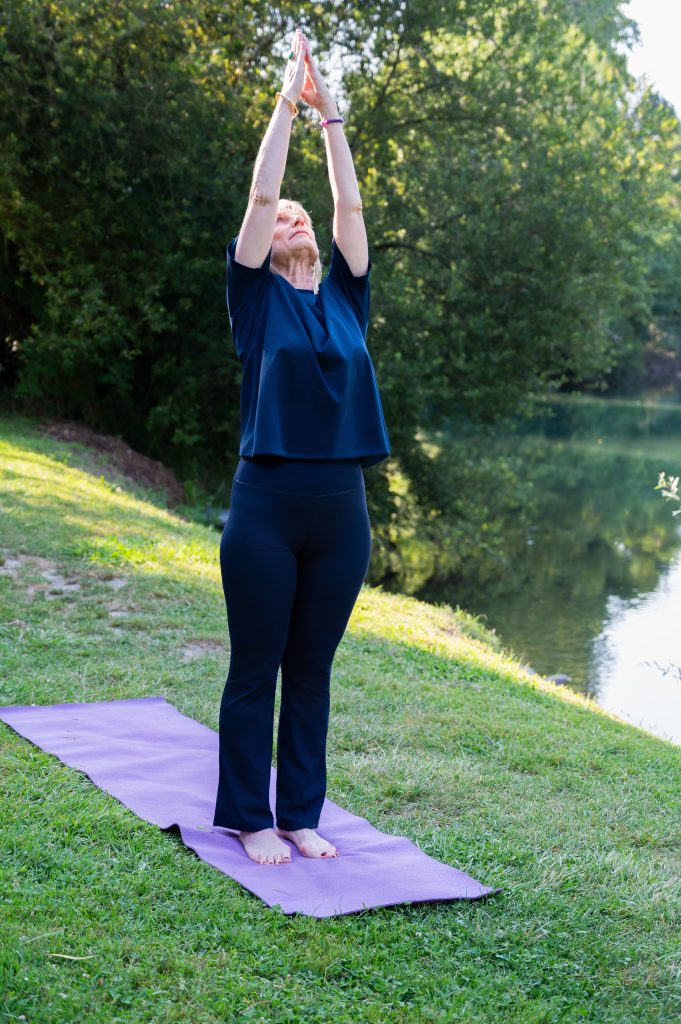
Yoga offers many useful ingredients for balance: awareness of the feet, alignment, controlled weight transfer, strength around the hips and ankles, concentration and calm breathing. A posture such as Tree can be valuable, but the benefit does not come from creating a perfect shape. It comes from the small adjustments the body makes while we stay present.
I also like to vary the challenge. We can narrow the base of support, move slowly from one position to another, turn the head, reach an arm or briefly reduce the support of the hands. These small changes teach the body to adapt.
Strength training supports this work. Stronger legs and hips make it easier to control a step, rise from a chair or recover from a loss of balance. Walking on different surfaces, dancing and simple coordination exercises add other useful dimensions. We do not have to choose one method.
Simple ways to train balance safely
Start near a wall, a chair or a kitchen counter. Support is not cheating; it allows you to practise with confidence. Try standing with your feet closer together, placing one foot slightly in front of the other, or lifting one heel. Progress only when the exercise feels steady.
You can also practise everyday transitions: standing up from a chair with control, stepping sideways, walking heel to toe for a few steps, or slowly changing direction. A few focused minutes, repeated regularly, can be more useful than one difficult session from time to time.
The exercise should feel challenging enough to require attention, but not frightening. If you experience frequent falls, dizziness, sudden weakness, new vision problems or a marked change in your balance, speak to a healthcare professional before trying to solve it with exercise alone.
Balance after 50 is confidence in motion
For me, ageing well is not about performing impressive poses. It is about trusting the body in ordinary life: walking outside, travelling, carrying a bag, getting down to the floor and knowing that we can get back up.
Training balance is a quiet investment in that freedom. It may take only a few minutes, but it prepares us for hundreds of small movements every day.
What we lose when we stop challenging balance
Balance responds to use. If our days mainly involve flat floors, familiar routes and supportive shoes, the body receives fewer opportunities to make the small corrections that keep this skill alive. We may still be active and walk regularly, yet rarely ask the ankles, hips, eyes and nervous system to solve a balance problem.
Confidence can change too. After one stumble, or simply after a period of illness or inactivity, we may begin to move more cautiously. Caution is useful when there is a real danger, but constant hesitation can shorten the stride, reduce movement variety and make the body less prepared for unexpected situations. The answer is not to take unnecessary risks. It is to rebuild capacity gradually in a safe environment.
This is one reason I prefer to think of balance as practice rather than performance. Wobbling is not failure. A small wobble is the nervous system gathering information and making a correction. Of course, we need support close by, but we do not need to wait for perfect stillness before the exercise is doing something useful.
The feet are part of the conversation
We sometimes try to balance from the shoulders upwards, becoming rigid and holding the breath. In reality, the conversation starts much lower down. The feet sense the floor and the ankles make continuous, almost invisible adjustments.
In a yoga class, I often invite women to notice the three main points of support under each foot: the base of the big toe, the base of the little toe and the heel. This does not mean pressing all three points with exactly the same force. It means becoming aware of how weight moves across the foot.
Foot comfort matters as well. Pain, reduced sensation or footwear that changes the way we feel the ground can affect stability. If you have persistent foot pain, numbness or a sudden change in sensation, it is worth discussing it with an appropriate health professional. Balance work should not be used to ignore a symptom that needs assessment.
Balance changes when life becomes more realistic
Standing on one leg in a quiet room is a useful beginning, but daily life rarely happens in such controlled conditions. We carry bags, look to the side, talk to someone, step over objects and walk on surfaces that are not perfectly even.
Once a basic exercise feels secure, we can make it slightly more realistic. We might turn the head slowly, reach one arm, hold a light object or step in several directions. We can practise looking ahead rather than constantly at the feet. Each change should be introduced separately so that the challenge remains understandable.
Dual-task exercises, in which we move while also thinking or talking, can be useful because attention is part of balance. But they should come later, not at the beginning. There is no benefit in creating confusion for its own sake. The purpose is to widen our options while keeping the experience safe.
A short balance practice to begin with
Choose a stable support and a space without obstacles. Begin by standing tall and shifting your weight gently from one foot to the other. Then place one foot slightly in front of the other and stay for a few breaths. Change sides. If that feels comfortable, lift one heel or allow one foot to become very light rather than immediately lifting the whole leg.
Next, practise five controlled sit-to-stands from a chair. Notice whether you push more through one leg than the other. Finish with a few slow steps sideways in each direction, keeping the toes facing forwards and the knees soft.
This is not a complete programme and it does not need to be exhausting. It is a way of giving the nervous system a regular reminder. Two or three minutes while the kettle boils can become a genuine practice if it is repeated.
What progress can look like
Progress in balance is not always dramatic. You may notice that you need the wall less often, that you recover more easily from a wobble or that you feel calmer on uneven ground. Perhaps stairs require less concentration, or getting dressed while standing becomes more comfortable.
These small signs matter because the real goal is not a long one-legged pose. The goal is greater ease in life. If an exercise becomes easy, increase only one element at a time: a narrower stance, a longer hold, a gentle movement of the arms or a little less hand support.
And remember that balance varies. A poor night, a stressful day or a painful joint may make the same exercise feel different. Adaptation is not a step backwards. It is part of training intelligently.
Read also : Strength Training After 45: Why It Matters for Women
Sources and further reading
• World Health Organization. WHO Guidelines on Physical Activity and Sedentary Behaviour. 2020. https://www.who.int/publications/i/item/9789240015128
• Sherrington C et al. Exercise for preventing falls in older people living in the community. Cochrane Database of Systematic Reviews. 2019;1:CD012424. https://pubmed.ncbi.nlm.nih.gov/30703272/
• Lesinski M et al. Effects of balance training on balance performance in healthy older adults: a systematic review and meta-analysis. Sports Medicine. 2015;45:1721-1738. https://pubmed.ncbi.nlm.nih.gov/26325622/
Note: This article provides general information and does not replace individual medical advice.


